Wednesday, December 16, 2020

REPRODUCTION IN ORGANISMS

                    *   REPRODUCTIVE PARTS OF MALE*

**  Like other higher mammals,Human male reproductive system comprises testis , vasa efferentia , epididymis , seminal vesicle , ejaculatory ducts , ureter , penis . prostate and bulbourethral gland( cowpers gland) are the associated reproductive gland.

human  reproduction system

**Testis:-

-It is the primary sex organ . that manufractures gametes . also secret sex hormone.

-It is descended outside the body 2-3 degree celsius (2-2.5 a/c to NCERT) temp , less than body temp. is recuired For proper spermatogenesis .It is descended during devlopment through inguinal canal of iliac fossa.

-Testis is pink ,oval str.,measuring  4 x 3 x 2.5 centimeters (cm) in size and 15-25 gm in wt.  .

-Testis is covered by tunica albuginea , defferentiated anteriorly as tunica vaginalis and posteriorly as a thick mediastinum .

 -Internally Each testis has about 250 lobules/chambers. each having 1-3 fine coiled tubules called seminiferous tubules .Whole spermatozoa(sperms) are manufactured (By spermatogenes).

-Each SFT is about 80 cm in length and nearly of 500m of SFT are present in both testis.

-  SFT is lined by germinal epithelium that cuts of spermatogonia for spermatogenesis under influence of FSHand LH.

-In the gaps of SFT like several interstitial cells/leydig cells which secret the male sex harmone, androgen(testosterone). It devlops and maintains the secandry sexual character(masculine character Viz. moustaches ,beards, coarse voice, Hairs on chest etc as well as maintains vitality in females also.) 

l.s. of testis 

                                                                                                                                                                                                                                                                                                                                                                                                                                                                                                                                                                                                                                                                                                                                                                                                                                                                                                                                                        
           T.s. of testis              
 

-Inside the seminiferous tubules  Few large cells of serotoli are found.They give nutrition to devloping spermatozoaunder the influence of fsh. LH Or,ICSH acts on leydig cells SFT lie embeded vascular connective tissue.

    Testis is supported in scrotum through a spermatic cord under the skin of scrotum.fat layer is absent but a fat free layer tunica dortus is present. it is temp.labile and shrinks the testis upward in low temp.

** VASA EFFERENTIA**

- SFT give rise to longitudinal sperm ducts in mediustinum/rete testis from these ducts 12-20 sperm ducts emerge out . they are termed as vasa efferentia.

**EPIDIDYMIS** 

-Vasa efferentia gives rise to a horse-shoe shaped epididymis.It comprises 6m sperm ducts spermatozoa are stored up to 18 hrs in it.it is divisible in to 3 parts. which is given below.:-

A- Caput:-upper narrow part


      B-Corvus:-midder narrow part


      C-Cauda:-lower narrow part

                  epididymis                      

**VASA DEFERENS:-It is a 45cm sperm duct arising from the cauda part of epididymis . and ascending is abdomen with the help of a spermatic cord .After ejaculation (rlease) remainin spermatozoa  come back to vasa Deferences.

**SEMINAL VESICLE** 

- In abdomen vasa deferences ends in aseminal vesicle. which is Secretory or, glandular in function (in man). in other animals it stores seminal fluid Secretion seminal vesicle accounts for 60% of seminal fluid .it contain fructose , calcium ,citric acid ascorbic acid , inorganic phosphate , phosphokinase , electrolytes ,sorbitol etc. seminal vesicle are paired structure. 

**EJACULATORY DUCT**

-It is a 2cm paired duct arising from seminal vesicle and passing through the prostate and meets the urethra.

**URETHRA**

-It is 18-20 cm urine duct but seminal fluid (spermatozoa) also pass through it in male , hence it is also a urinogenital duct (in male). It is divisible in to 3 parts . which is given below:-

A-Prostate urethra:- inside prostate


B-Membranous urethra:-inside penis (penile urethra)


C-Ductus naviculum:-inside glans penis


open outside through an aperture called urethral meatus .

**PENIS**

-It is apendulous external genitalium in human . it is 5-7 cm in normal state and 15-20 cm in erect stage . urethra / urinogenetial duct passess through it .


                                                                Its anterior part sensitive part is called glans penis  covered by aloose flap of skin called prepuce (foreskin).  Internally skin is followed by a fibrous connective tissue  and two types of musculatures , corpus cavernosum and corpus spongiosum (contains urethra) paired dorsal anteries and veins as well as nerves are present.


 t.s. of testis 

**Reproductive gland**

- In human the Reproductive gland are prostate and bulbourethral glands(in several other mammal permineal and rectalglands are also present).

**Prostate gland**

-It is a single inverted pyramid like gland 3cmacross in size located down the seminal vesicle. paired ejacculatory duct and  prostate urethra passes through through it. prostate secrections are whitish, odormous , alkaline and protective as well Nutritive to spermatozoa . it contains prostate glandins (lipid). pgospholipids, spermeine,fibrolysin, fibrinogenase etc.it constitutes 20-30%part of seminal fluid.

**Bulbourethral gland (=cowper's gland)**

-Paired glands just below the prostate open in urethra .


                                                                                        secrete strong alkaline secretions that protects the spermatozoa from acidity of urine as a precoilus secretions. comparable with bartholin's gland of female.  

Spermatogenesis:-

  • Formation of spermatozoa
  • occcurs imside seminiferous tubules under the influence of LH (icsh) and fsh of pituitary as well as androgen of testis
  •  Germinal epithelium cuts off primary male germ cells called spermatogonia  by mitotic divisions
  • Spermatogonia again divide mitotic 

Saturday, July 27, 2019

CAROLUS LINNAEUS

            *CAROLUS LINNAEUS (1707-1778)*

   Hey guys,

                     As we know that Carolus linnaeus is known as "Father of modern botany". He is the founder of modern concept of classification.He was a swedish naturalist who became intrested in the study of natural history since his childhood. During his studentlife ,He published his first papper on sexuality of plants(1729) under the guidance of Dr. Rudbeck in the university of uppsala.Later in 1730,he enumerated plants of  uppsala botanical garden in Hortus uplandicus. in his new edition of Hortus uplandicus(1732), He Classified plants on his basis of his so called sexual system. He received his M.D. Degree  from university of Harderwijk in 1735 .His book Systema naturae appeared in 1735 which provide the foundation for the classification of plant ,animal and minerals. In 1737, He published Hortus cliffortianus based on plant present in the garden of George clifford.His Genera plantarum and Classes plantarum appeared in 1737 and 1738 respectively. He published the revised version of his earlier classification of plants ,givem in systema naturae(1735) and classes plantarum(1738), in his book Philosophia Botanica in 1751. While working as a professor of botany and medicine at university of uppsala , He published his  Species plantarum in1753  which describe  7300  species in about 1000 genera and he arranged them on the basic of his sexual system of classfication.He used the bionomial nomenclature. Species plantarum was revised many time and  remained  the most significant system of classification until the beginning of nineteenth centuary. 


                * CAROLUS LINNAEUS (1707-1778) * 

   हे लोगों,  

                    जैसा कि हम जानते हैं कि कैरोलस लिनियस को "आधुनिक वनस्पति विज्ञान के पिता" के रूप में जाना जाता है। वह वर्गीकरण की आधुनिक अवधारणा के संस्थापक हैं। वह एक स्वीडिश प्रकृतिवादी थे, जो बचपन से ही प्राकृतिक इतिहास के अध्ययन में अंतर्मुखी हो गए थे। अपने छात्र जीवन के दौरान, उन्होंने उप्पस विश्वविद्यालय में डॉ। रुडबेक के मार्गदर्शन में पौधों की कामुकता (1729) पर अपना पहला पेपर प्रकाशित किया। 1730 में, उन्होंने हॉर्टस अपलैंडिकस में उप्पसला वनस्पति उद्यान के पौधों की गणना की। हॉर्टस अपलैंडिकस (1732) के अपने नए संस्करण में, उन्होंने अपने तथाकथित यौन प्रणाली के आधार पर पौधों को वर्गीकृत किया। उन्होंने 1735 में हार्डविजक विश्वविद्यालय से एमएड की डिग्री प्राप्त की। उनकी पुस्तक सिस्टेमा नटुराई 1735 में दिखाई दी जो पौधों, जानवरों और खनिजों के वर्गीकरण की नींव प्रदान करती है। 1737 में, उन्होंने जॉर्ज क्लिफोर्ड के बगीचे में मौजूद पौधे के आधार पर हॉर्टस क्लिफ़ोर्टिअनस प्रकाशित किया। उनका जेनरा प्लांटरम और क्लास प्लांटारम क्रमशः 1737 और 1738 में दिखाई दिया। उन्होंने 1751 में अपनी पुस्तक फिलोसोफ़िया बोटानिका में पौधों के अपने पहले वर्गीकरण, सिस्टेम नैटुरे (1735) और कक्षाओं प्लांटरम (1738) के संशोधित संस्करण को प्रकाशित किया। उप्साला विश्वविद्यालय में वनस्पति विज्ञान और चिकित्सा के प्रोफेसर के रूप में काम करते हुए उन्होंने प्रकाशित किया। उनकी प्रजाति प्लास्टारम in1753 जो लगभग 1000 पीढ़ी में 7300 प्रजातियों का वर्णन करती है और उसने उन्हें क्लासफिकेशन की अपनी यौन प्रणाली के मूल में व्यवस्थित किया। उन्होंने बायोमियल नामकरण का उपयोग किया। प्रजाति प्लांटरम को कई बार संशोधित किया गया और उन्नीसवीं शताब्दी की शुरुआत तक वर्गीकरण की सबसे महत्वपूर्ण प्रणाली बनी रही।                                                                        धन्यवाद

                       * charolus linnaaius (1707-1778) * 

   he logon, 

                     jaisa ki ham jaanate hain ki kairolas liniyas ko "aadhunik vanaspati vigyaan ke pita" ke roop mein jaana jaata hai. vah vargeekaran kee aadhunik avadhaarana ke sansthaapak hain. vah ek sveedish prakrtivaadee the, jo bachapan se hee praakrtik itihaas ke adhyayan mein antarmukhee ho gae the. apane chhaatr jeevan ke dauraan, unhonne uppas vishvavidyaalay mein do. rudabek ke maargadarshan mein paudhon kee kaamukata (1729) par apana pahala pepar prakaashit kiya. 1730 mein, unhonne hortas apalaindikas mein uppasala vanaspati udyaan ke paudhon kee ganana kee. hortas apalaindikas (1732) ke apane nae sanskaran mein, unhonne apane tathaakathit yaun pranaalee ke aadhaar par paudhon ko vargeekrt kiya. unhonne 1735 mein haardavijak vishvavidyaalay se emed kee digree praapt kee. unakee pustak sistema naturaee 1735 mein dikhaee dee jo paudhon, jaanavaron aur khanijon ke vargeekaran kee neenv pradaan karatee hai. 1737 mein, unhonne jorj kliphord ke bageeche mein maujood paudhe ke aadhaar par hortas klifortianas prakaashit kiya. unaka jenara plaantaram aur klaas plaantaaram kramashah 1737 aur 1738 mein dikhaee diya. unhonne 1751 mein apanee pustak philosofiya botaanika mein paudhon ke apane pahale vargeekaran, sistem naiture (1735) aur kakshaon plaantaram (1738) ke sanshodhit sanskaran ko prakaashit kiya. upsaala vishvavidyaalay mein vanaspati vigyaan aur chikitsa ke prophesar ke roop mein kaam karate hue unhonne prakaashit kiya. unakee prajaati plaastaaram in1753 jo lagabhag 1000 peedhee mein 7300 prajaatiyon ka varnan karatee hai aur usane unhen klaasaphikeshan kee apanee yaun pranaalee ke mool mein vyavasthit kiya. unhonne baayomiyal naamakaran ka upayog kiya. prajaati plaantaram ko kaee baar sanshodhit kiya gaya aur unneesaveen shataabdee kee shuruaat tak vargeekaran kee sabase mahatvapoorn pranaalee banee rahee.                                                                        dhanyavaad


Saturday, July 20, 2019

REPRODUCTIVE PARTS OF FEMALE

              **REPRODUCTIVE PARTS OF FEMALE**

-Human Female Reproductive system comprises the organs like ovary,fallopian tube(oviduct),utrus, vagina, vulva, and Reproductive glands(Bartholins Gland And Mammary Gland).

 female-reproductive-system 

 1-OVARY:- Ovary is the important primary sex organ which produces the egg cell (ovum) and the female sex harmone Estrogen as well as progesterone .

- Human Ovary has average size of 4cm Length ,2.5cm width , And 1.5cm height and2.8g by weight (in nulliparous or, adult virgin female).

Lateral view of female reproductive system

 
Sec. Oocyte

Graffian follicle

 - Both the ovaries are attached on either sides of uterus through ligaments(yellow elastic fibres)

- Ovaries are covered by embryonic or, fetal membrane (epithelium) which is not serosa or, peritoneum(as in other organs areolar connective tissue layer)

-This is membrane is followed by Germinal epithelium (also called fetal or, embryonic i.e. completely developed during fetal life no div. After birth ).

-During Fetal life Ger. Epi. Cuts off (by mitosis)about 2mn (20 Lacs ) oogania (gamete mother cell or, pr.germ cell)They may also divide by mitosis to form even more oogonia

-several of them grow a little to form primary oocyte which soon gate surrounded by a layer of cells forming primary follicles ( 1-5 lacs usually 1-2 lacs).

-primary oocyte undergo arrested meiotic division(first set) for a long time.

-Most of the primary oocyte and primary follicles degenerate only 60-80 thousand survived and the follicles become two layers secondary follicles. loss of oocyte or,egg cell and follicles without ovulation is known as atresia.

-out of 60-80 thousand sec. Follicles only 400-500 get degenerated in to tertiary (3 layered follicles).

-tertiary follicles develop a cavity called antrum and the inner layer called membrane  granulosa.

-in tertiarry follicles first set of meiotic division is completed at puberty(12-14 yes+_2 yes) secondary oocyte (ovum) is formed with first polar body.

2- Graffian Follicle:- it is the mature functional tertiary follicle ready to ovulate (realising of ovum ). Only one graffian follicle is released per month b/w 14 to 16th day(in most Indian females on 14th day). After the first day of menstrual cycle due to increase in fsh and LH. theca interna secrets the estrogen that develops the  secondary sexual character of female. ( Feminine character) from puberty. after  ovulation several cells from membrana granulosa remain adhered to the ovum/egg cell/ secondary oocyte. Ootid  is not formed in Graafian follicle and the second set of meiotic division occurs in the fallopian tube only when fertilization is affected following the release of second polar body( in fallopian tube). size of Graafian follicle is around 10 mm  and thatof the ovum is about 0.1 mm in initial stage.

An oocyte

3- Fallopian tube:- A curved tube/duct is present between the ovary and the upper part of uterus for the movement of the gamete to bring about fertilization (in fallopian tube) and implantation in uterus it is internally lined by ciliated epithelium. fallopian tube measures about 10-12 cm. its distal end is field and overhangs the ovary and termed "Fimbriae".

 it is followed by infundibulum, An ampulla and a narrow isthums,  attached with the uterus. fertilization normally occurs in ampulla.

4- Uterus:- Isthmus of the fallopian tube joins the upper part of the uterus. It is the Pear shaped vesicle measuring 8×5×2.5cm in size in a nulliparous women (adult virgin). It extends up to 20 cm in pregnancy by 8th months.

Uterus is covered by three layers.the outer one is thin parametrium followed by middle muscular myometrium and inner vascular endometrium. Implantation of the embryo accuse over the endometrium upper part of uterus is turmed uterus fundus (pos. part).  lower part is gradually tapering as a neck  and is known as the "cervix".

5- Vagina:- Below the uterus like a tubular 8 centimetre passes called vagina. It opens outside through "vulva". (=Pudendum). In the anterior part utilisation thick membrane called hymen, with a narrow Central aperture in virgin females . It reputures in first coitus me also get reptured in cycling, horse riding,jolt/jerks,use  of tampon (rough cotton pads) or even may presist even after coitus. that's why it may not be a reliable reason for virginity.

Vulva and urethral opening are covered by minor (inner) and a major(outer) labia. At the anterior junction of the two minor labia ,lies a tiny finger like a sensitive clitoris. it is  comparable with the glans penis of the male the space under the labia is termed vestibule. The thick part above the clitoris is termed mons pubis. Below the vulva lies a wrinkled  zona called are called from it fourchette, followed by perinium above the anus.

External genetalia  in human female

:- Reproductive gland:- Bartholins and Mammary glands are the reproductive gland.

1- Bartholins gland:-  On either side of vagina lies the bartholin gland which secret watery alkaline fluid in order to protect the male gametes from acidity of urine.  hence comparable with bulbulurethral gland it means cowper's gland of the male.

2- Mammary gland:- mammary glands in fact area the feeding glands for the infant reproduction results the young ones which require feeding has mammary gland are associated with the reproduction system.
Mammary gland

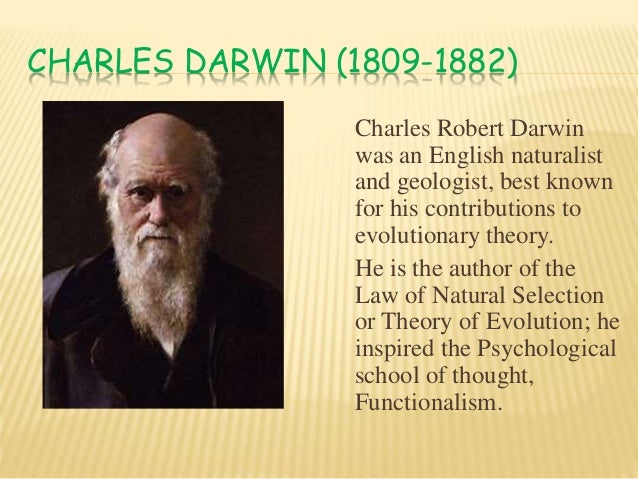
*ABOUT CHARLES ROBERT DARWIN*

              *ABOUT CHARLES ROBERT DARWIN*

 Hey guys,

                 Charles Robert Darwin, FRS FRGS FLS FZS was an English naturalist, geologit and biologist, best known for his contributions to the science of evolution. His proposition that all species of life have descended over time from common ancestors is now widely accepted, and considered a foundational concept in science. 

A man who dares to waste one hour of time has not discovered the value of life.
The mystery of the beginning of all things is insoluble by us; and I for one must be content to remain an agnostic.

 Darwinism is a theory of biological evolution developed by the English naturalist Charles Darwin (1809–1882) and others, stating that all species of organisms arise and develop through the natural selection of small, inherited variations that increase the individual's ability to compete, survive, and reproduce.

चार्ल्स रॉबर्ट डार्विन, FRS FRGS FLS FZS एक अंग्रेजी प्रकृतिवादी, भूविज्ञानी और जीवविज्ञानी थे, जिन्हें विकासवाद के विज्ञान में उनके योगदान के लिए जाना जाता था। उनका प्रस्ताव था कि जीवन की सभी प्रजातियां आम पूर्वजों से समय के साथ उतरी हैं, अब इसे व्यापक रूप से स्वीकार किया जाता है, और विज्ञान में एक मौलिक अवधारणा माना जाता है। विकिपीडिया जन्म: 12 फरवरी 1809, द ​​माउंट हाउस, श्रुस्बरी, यूनाइटेड किंगडम निधन: 19 अप्रैल 1882, होम ऑफ चार्ल्स डार्विन - डाउन हाउस, डाउनी, यूनाइटेड किंगडम पुरस्कार: कोपले मेडल, वोलास्टन मैडल, रॉयल मेडल शिक्षा: क्राइस्ट कॉलेज कैंब्रिज (1828-1831), MORE उल्लेख। उद्धरण एक आदमी जो एक घंटे का समय बर्बाद करने की हिम्मत करता है, उसने जीवन के मूल्य की खोज नहीं की है। सभी चीजों की शुरुआत का रहस्य हमारे द्वारा अघुलनशील है; और मैं एक अज्ञेय बने रहने के लिए संतुष्ट होना चाहिए। यदि गरीबों का दुख प्रकृति के नियमों के कारण नहीं है, लेकिन हमारे संस्थानों द्वारा, महान हमारे पाप है।

चार्ल्स रॉबर्ट डार्विन, FRS FRGS FLS FZS एक अंग्रेजी प्रकृतिवादी, भूविज्ञानी और जीवविज्ञानी थे, जिन्हें विकासवाद के 
विज्ञान में उनके योगदान के लिए जाना जाता था। उनका प्रस्ताव था कि जीवन की सभी प्रजातियां आम पूर्वजों से समय के
 साथ उतरी हैं, अब इसे व्यापक रूप से स्वीकार किया जाता है, और विज्ञान में एक मौलिक अवधारणा माना जाता है।
 
जन्म: 12 फरवरी 1809, द ​​माउंट हाउस, श्रुस्बरी, यूनाइटेड किंगडम
निधन: 19 अप्रैल 1882, होम ऑफ चार्ल्स डार्विन - डाउन हाउस, डाउनी, यूनाइटेड किंगडम
पुरस्कार: कोपले मेडल, वोलास्टन मैडल, रॉयल मेडल
शिक्षा: क्राइस्ट कॉलेज कैंब्रिज (1828-1831), MORE
उल्लेख। उद्धरण
एक आदमी जो एक घंटे का समय बर्बाद करने की हिम्मत करता है, उसने जीवन के मूल्य की खोज नहीं की है।
सभी चीजों की शुरुआत का रहस्य हमारे द्वारा अघुलनशील है; और मैं एक अज्ञेय बने रहने के लिए संतुष्ट होना चाहिए।
यदि गरीबों का दुख प्रकृति के नियमों के कारण नहीं है, लेकिन हमारे संस्थानों द्वारा, महान हमारे पाप है।
the misery of the poor be caused not by the laws of nature, but by our institutions, great is our since.

डार्विनवाद अंग्रेजी प्रकृतिवादी चार्ल्स डार्विन (1809-1882) और अन्य द्वारा विकसित जैविक विकास का एक सिद्धांत है, जिसमें कहा गया है कि जीवों की सभी प्रजातियां छोटे, विरासत में मिली विविधताओं के प्राकृतिक चयन के माध्यम से पैदा होती हैं और विकसित होती हैं, जो व्यक्ति की प्रतिस्पर्धा करने, जीवित रहने की क्षमता को बढ़ाती हैं

REPRODUCTIVE PARTS OF MALE

                     REPRODUCTIVE PARTS OF MALE **  Like other higher mammals,Human male reproductive system comprises testis , vasa e...